
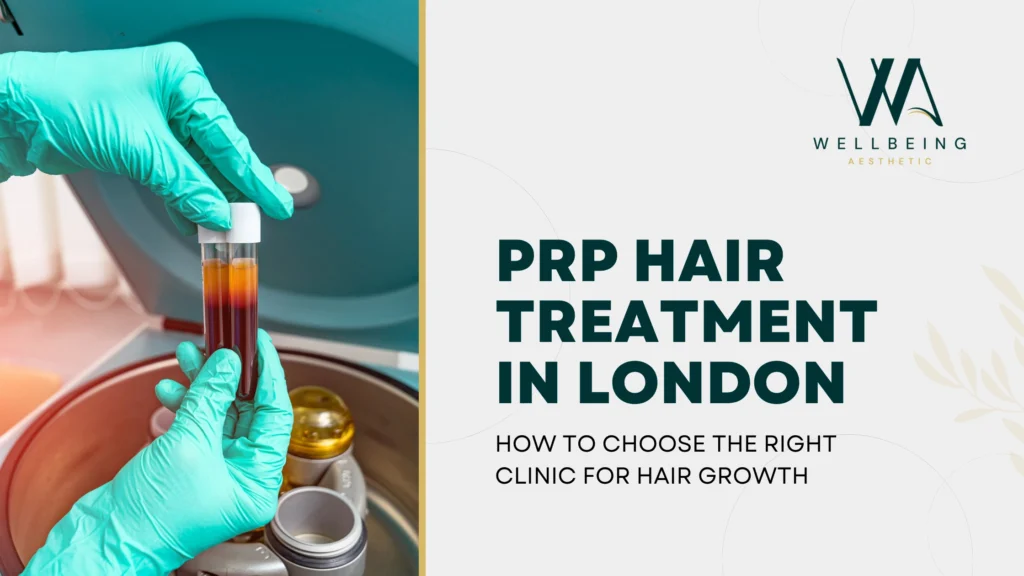
PRP Hair Treatment in London: How to Choose the Right Clinic for Hair Growth
PRP Hair Treatment in London: Guide to Choosing the Right Clinic for Hair Growth There is a reason PRP has become one of the most talked about treatments in hair clinics across London. It works with your body’s own biology, requires no surgery, no daily medication, and no significant downtime – and for the right candidate, it produces measurable, visible improvements in hair growth and density. PRP stands for Platelet-Rich Plasma. It is a treatment that takes the growth factors naturally present in your own blood, concentrates them, and delivers them precisely to the scalp – where they signal follicles to become more active, produce thicker, stronger strands, and sustain a longer growth phase. If you have been researching PRP hair treatment in London, you already know that dozens of clinics offer it. What you may not know is how much the quality of treatment varies from one clinic to the next. The practitioner’s medical background, the equipment used to prepare the PRP, the concentration achieved, and the personalization of your treatment plan all directly determine how well the treatment works. This guide covers everything you need to make a confident, well-informed decision: how PRP stimulates hair growth, who it is suitable for, what results are genuinely realistic, how much it costs in London, and the seven essential checks to make before choosing your clinic. How Does PRP Treatment Stimulate Hair Growth? To understand why PRP produces results for hair growth, it helps to understand what is happening at follicle level when hair starts to thin. Thinning hair is typically the result of follicles spending too much time in the telogen phase and not enough time actively growing. PRP intervenes at a biological level. Here is how the treatment works from start to finish: A small blood sample – typically 10 to 20ml – is drawn from your arm, exactly as it would be for a standard blood test. The sample is placed in a medical-grade centrifuge that spins at high speed, separating the platelet-rich plasma from red blood cells and other components. The resulting PRP is rich in growth factors – including PDGF, VEGF, EGF, and IGF-1 – the proteins your body uses naturally for tissue repair and cellular regeneration. This concentrated plasma is then injected in precise micro-doses directly into the follicular zone of the scalp, targeting the areas where growth needs support. Once delivered to the scalp, those growth factors trigger a cascade of biological responses. They stimulate the stem cells in the hair follicle bulge, promote new blood vessel formation to improve the nutrient supply reaching each follicle, extend the active anagen growth phase, and encourage follicles that have become dormant to re-enter the growth cycle. The result is not simply reduced shedding. Over the following weeks and months, patients typically experience improved hair density, noticeably thicker and stronger individual strands, and a meaningful improvement in overall hair quality. The whole appointment takes around 45 to 60 minutes. There is no surgery, no general aesthetic, and no recovery time – most patients return to work the same day. What Hair Growth Results Can You Realistically Expect from PRP? One of the most important things to understand about PRP is that it works progressively. Hair growth is a biological process, and the results build over time rather than appearing immediately after treatment. Setting realistic expectations is essential – and any clinic that promises dramatic results quickly should be approached with caution. Here is an honest, month-by-month picture of what most patients experience: Weeks 1-4: Reduced Shedding The growth factors from your first PRP session begin signaling follicle activity almost immediately, but visible changes take time to develop. During this early phase, many patients notice that excessive shedding starts to slow down. This is an encouraging early sign that follicles are stabilizing and beginning to transition into a more active state. Weeks 6-12: Fine New Growth Appears New fine hairs begin to emerge in areas that have thinned. Hair texture often improves noticeably during this phase – existing strands may feel stronger, and the scalp looks healthier overall. This is typically when patients start to feel confident that the treatment is working. Months 3-6: Visible Density and Thickness This is the period of most visible improvement. Hair density increases; individual strands grow thicker and more robust, and the overall appearance of the hair changes significantly. Most patients notice a clear difference in photographs compared to this period to their starting point. Months 6-12: Optimal, Sustained Results With a complete initial treatment course followed by maintenance sessions, results continue to build through this period. By the six-to-twelve-month mark, patients typically experience their best outcome – fuller, healthier hair with noticeably improved density and growth quality that is maintained with ongoing care. A standard PRP hair growth protocol at Wellbeing Aesthetic involves three to four sessions spaced four to six weeks apart, followed by maintenance appointments every four to six months to sustain and build on your results. The exact number of sessions and intervals are always personalized based on your assessment and how your scalp responds. How to Choose the Right PRP Hair Clinic in London: 7 Things to Check London has more clinics offering PRP than almost any other city in the UK. The challenge is identifying which ones will actually deliver the results the treatment is capable of producing. Here are the seven things that matter most: 1. Medical Qualifications of the Practitioner PRP involves drawing blood, centrifuge processing, and injecting into the scalp. It is a clinical procedure – not a beauty treatment – and it should be performed by, or under the direct supervision of, a medically qualified professional. Before booking, ask plainly: is the person performing the treatment of a doctor, a registered nurse, or a physician associate? What specific training have they completed in PRP for hair growth? In the UK, a significant proportion of practitioners offering injectable treatments do not hold formal medical qualifications. Choosing a medically led clinic is not