
Skin Boosters vs Dermal Fillers: What Is the Difference?
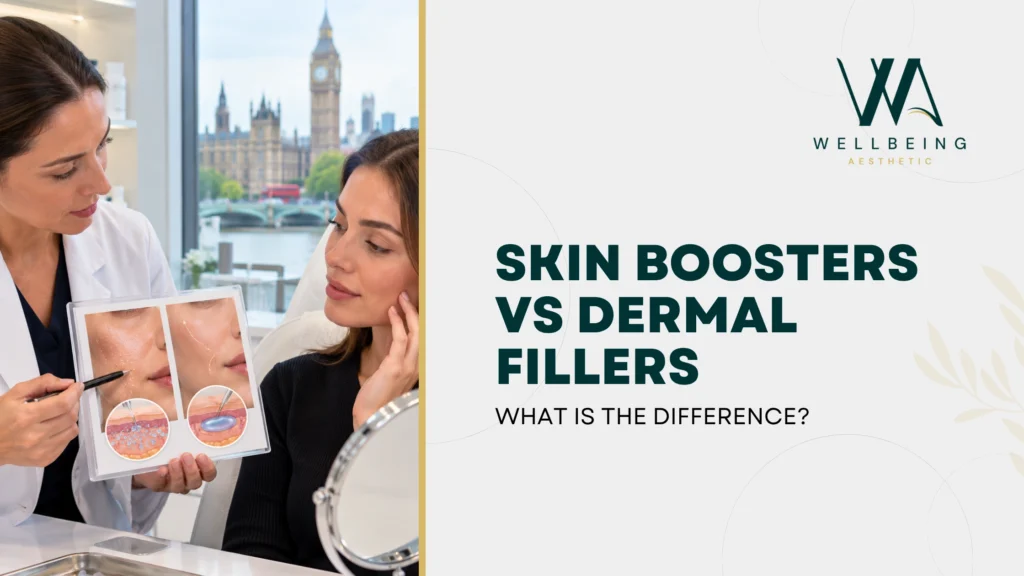
Skin Boosters vs Dermal Fillers: What Is the Difference? Standing in front of a treatment menu with “skin booster” and “dermal filler” listed one above the other is a common moment of confusion. Both use hyaluronic acid, both are delivered by injection, and both promise better looking skin, so it is easy to assume they do roughly the same job. They do not. One treatment rebuilds hydration and texture from within the skin. The other restores volume and structure that has been lost, or that was never quite there to begin with. Choosing the wrong one for your concern is one of the most common reasons people feel disappointed with a treatment, not because it failed, but because it was never designed to solve that particular problem. This guide sets out how skin boosters and dermal fillers differ, what each does beneath the skin, how their costs and results compare, and whether the two can be combined. You can see both sit alongside the rest of the aesthetic treatments available at Wellbeing Aesthetic’s Croydon clinic, a useful starting point before your consultation. As with any injectable treatment, none of this replaces a proper assessment. Skin type, medical history and your specific goals all affect which treatment, or combination of treatments, makes sense for you, which is why a consultation with a qualified practitioner should always come before booking either one. Key Takeaways Different jobs, same ingredient. Both treatments often use hyaluronic acid, but skin boosters hydrate the skin’s texture while dermal fillers restore lost volume and shape. Skin boosters spread, fillers hold their position. Skin boosters use a thinner, more fluid hyaluronic acid that disperses evenly, while dermal fillers use thicker, often cross linked gels designed to hold their structure. Longevity differs considerably. Skin booster results generally last around four to six months, while dermal filler results commonly last nine to eighteen months depending on the product and area treated. They are not interchangeable. A skin booster will not lift a hollow cheek, and a dermal filler is not designed to treat overall dullness or dehydration. Combining them is sometimes appropriate. Some patients benefit from a course of skin boosters alongside filler in a different area, but only when a practitioner confirms there is a genuine clinical reason for each treatment. Cost reflects the treatment, not just the product. UK skin booster sessions typically start lower than a full syringe of dermal filler, though prices vary by clinic, product and treatment area. Downtime is usually milder with skin boosters. Fillers can cause more noticeable swelling or bruising, particularly around the lips or under the eyes, while skin boosters tend to settle within a day or two. The right choice depends on your concern. Dullness and dehydration point toward a skin booster, while volume loss or contour change points toward a dermal filler, and a consultation clarifies which applies to you. What Is the Main Difference Between Skin Boosters and Dermal Fillers? The main difference comes down to purpose. Skin boosters use a thin hyaluronic acid solution, injected in small amounts across the skin, to improve hydration, texture and radiance. Dermal fillers use a thicker hyaluronic acid gel, injected at specific points, to add volume, reshape a feature or restore lost structure. This one distinction, hydration versus volume, shapes almost everything else in this guide, from the injection technique used to how long the results last and what each treatment reasonably costs. What Are Dermal Fillers and How Do They Work? Dermal fillers are gel based hyaluronic acid treatments, often cross linked so the product holds its shape rather than dispersing. A practitioner injects the gel at specific points and depths to restore volume, redefine a contour, or fill a hollow. What Are Dermal Fillers Commonly Used For? Restoring flattened or hollow cheeks Adding volume and definition to thin lips Softening nasolabial folds and marionette lines Filling tear troughs beneath the eyes Refining jawline and chin contour Results from dermal fillers generally last between nine and eighteen months, depending on the product used, the area treated and how quickly an individual’s body metabolises hyaluronic acid. Because filler results are visible almost immediately, most patients experience some swelling or bruising in the first few days. If you are considering lip filler specifically, our day by day guide to lip filler swelling stages sets out a realistic healing timeline. What Are Skin Boosters and How Do They Work? Skin boosters use a much thinner, more fluid hyaluronic acid formulation, delivered as small micro injections spread evenly across the treatment area rather than concentrated at specific points. Because the formulation disperses rather than holding a shape, skin boosters do not add volume or change a feature’s contour. Instead, the hyaluronic acid draws in and holds moisture within the dermis, gradually improving hydration, texture and radiance over several weeks. Many people describe the effect as an injectable version of a deep moisturiser, one that keeps working long after a cream would have been absorbed. Skin boosters tend to suit dull, dehydrated or tired looking skin where volume has not been lost, Skin boosters may suit people whose main concerns are dehydration, dullness, fine superficial lines or changes in overall skin quality rather than loss of facial volume. You can see the kind of subtle, gradual glow this treatment produces in the Wellbeing Aesthetic gallery, alongside results from the clinic’s other treatments. Skin Boosters vs Dermal Fillers: Full Comparison at a Glance The table below sets out how the two treatments compare across the factors that matter most when deciding between them. Factor Skin Boosters Dermal Fillers Main purpose Hydration and skin quality Volume and contour restoration Formulation Thin, low viscosity hyaluronic acid Thicker, often cross linked hyaluronic acid gel Injection technique Multiple micro injections spread evenly Targeted injections at specific points and depths Best for Dull, dehydrated or tired looking skin Hollow cheeks, thin lips, or lost structure Results timeline Builds gradually over 2 to 4 weeks Visible immediately, settles over 1 to 2
Skin Booster Treatment in Croydon, London: Benefits, Cost, Procedure, Results and Aftercare
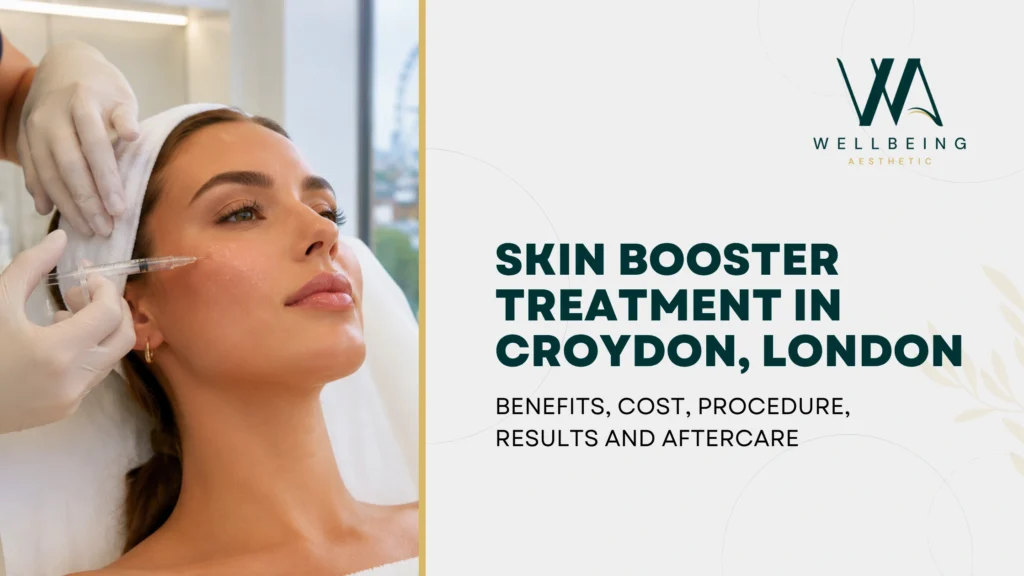
Skin Booster Treatment in Croydon, London: Benefits, Cost, Procedure, Results and Aftercare Dull, tight, dehydrated skin does not usually respond to another serum. You can layer on hyaluronic acid moisturiser every night and still catch your reflection under office lighting and think your skin looks tired rather than tired you feel. That gap between how your skin looks and how well you are taking care of it is exactly the problem skin boosters were designed to close. Skin boosters have become one of the most requested treatments among people in their late twenties, thirties, and forties who are not chasing a dramatically different face, just a healthier looking one. They sit in an unusual space in aesthetic medicine: not a filler, not a wrinkle treatment, but a way of putting hydration back into the skin itself, at a depth no cream can reach. If you are based in Croydon or the wider South London area and searching for what a skin booster treatment actually involves, this guide covers how the treatment works, what it costs, how long results last, and what a sensible aftercare routine looks like. It also looks honestly at when a skin booster is the right call and when a different treatment, such as Profhilo or a dermal filler, might serve you better. None of these replaces a proper consultation. Skin type, medical history, and goals all affect whether skin boosters are the right starting point, which is why every treatment plan at a medically led clinic should begin with an assessment rather than a menu. Key Takeaways Skin boosters treat hydration, not volume. They use micro injections of hyaluronic acid to improve texture and radiance, unlike dermal fillers, which restore lost volume and contour. Results build gradually. Most people notice improved hydration and glow over two to four weeks, not immediately after the appointment. A course works better than a single session. Clinics typically recommend two to three initial sessions spaced several weeks apart, followed by maintenance roughly every four to six months. Downtime is minimal for most people. Mild redness or small bumps at injection points usually settle within a day or two, though bruising is possible. Pricing varies depending on product and location. UK skin booster sessions generally fall between £150 and £450, with London clinics often at the higher end of that range. They are not the same as Profhilo. Skin boosters use lower concentration hyaluronic acid to spread across a wider area, while Profhilo uses a small number of higher concentration injection points to stimulate collagen. Aftercare protects your results. Avoiding makeup, saunas, and strenuous exercise for around 24 hours helps reduce irritation and supports even product distribution. Not everyone is a suitable candidate. Pregnancy, breastfeeding, active skin infections, and certain medical conditions typically mean postponing or avoiding treatment until a practitioner confirms it is appropriate. What Are Skin Boosters? Skin boosters are injectable hyaluronic acid treatments designed to hydrate the skin from within rather than add volume or shape. A practitioner delivers a series of fine micro injections across the treatment area, most often the face, neck, or hands, placing the product just beneath the skin surface where it draws in and holds moisture. Because the formulation is thinner than a typical dermal filler, skin boosters spread evenly through the skin rather than sitting in one spot. That is what makes them suited to overall skin quality rather than to reshaping a specific feature. Many people describe the effect as an injectable version of a deep moisturiser, one that keeps working long after a topical product would have been absorbed and washed away. You can find a summary of skin boosters alongside Wellbeing Aesthetic’s other treatments, including how they compare to Profhilo and dermal fillers on the same page. How Do Skin Boosters Work? Hyaluronic acid occurs naturally in the skin but declines with age, sun exposure, and general wear. Skin boosters replenish that supply directly in the dermis, where the molecule binds to water and gradually plumps into the surrounding tissue. Over several weeks, many patients also see a modest improvement in skin elasticity, since better hydrated skin tends to support its own structure more effectively. What Are the Benefits of Skin Booster Treatment? Skin boosters are most valued for the improvements they bring to skin quality rather than shape. Reported benefits typically include: Noticeably improved hydration and a healthier, less dull complexion Smoother skin texture and a reduction in the appearance of fine, superficial lines A subtle increase in elasticity and firmness as hydration levels improve A more even, radiant look often described as a natural glow rather than an obvious change Suitability for areas that do not need volume, such as under the eyes, the neck, or the backs of the hands These are realistic, gradual outcomes rather than dramatic transformations. Anyone expecting the kind of change associated with dermal fillers is usually better served by a different treatment, or a combination of approach agreed during a consultation. If dehydrated, tired looking skin is your main concern, it’s worth seeing how skin boosters sit alongside Wellbeing Aesthetic’s full range of aesthetic treatments in Croydon before deciding what to book. Skin Boosters vs Dermal Fillers vs Profhilo: What Is the Difference? These three injectable treatments are frequently confused because they all use hyaluronic acid, yet they solve different problems. The table below sets out how they compare. Treatment Main Purpose Typical Results Last Best For Skin Boosters Deep hydration and improved skin texture 4 to 6 months Dull, dehydrated, or tired looking skin without volume loss Dermal Fillers Restoring lost volume and contour 9 to 18 months Hollowed cheeks, thinning lips, or lost facial structure Profhilo Bio remodeling and collagen stimulation 6 to 12 months Overall skin laxity and quality across the face, neck, or hands What Happens During a Skin Booster Treatment in Croydon? A skin booster appointment follows a consistent structure, though the number of injection points and total treatment time depends on the area covered.