

Acne Face Mapping: What Your Breakouts Say About Your Health (Complete Guide)
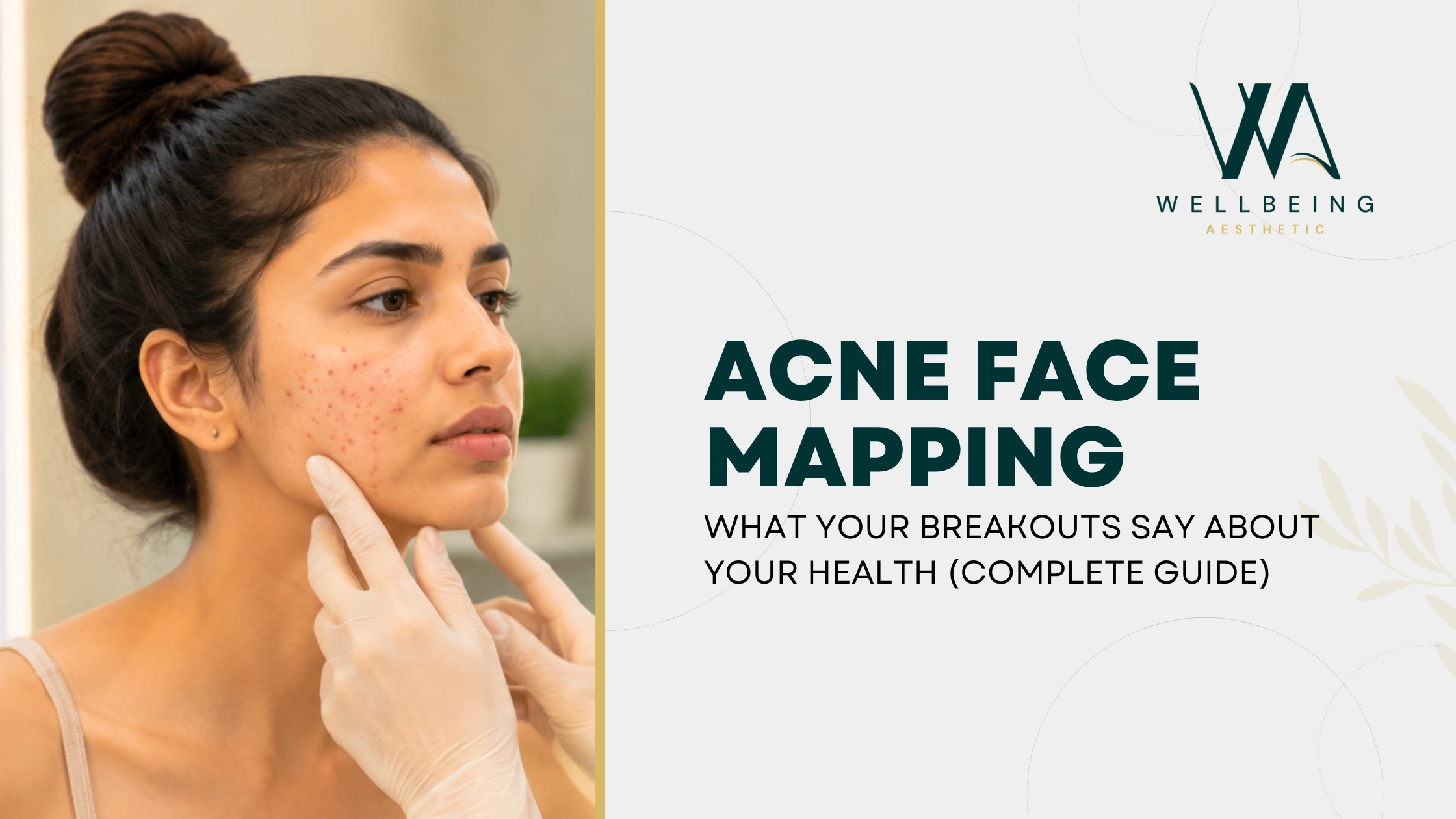
You cleanse twice a day. You never skip SPF. You drink water, yet your skin keeps breaking out in the same spots.
If that sounds familiar, your breakouts might be trying to tell you something.
Acne face mapping is an ancient practice, rooted in traditional Chinese medicine (TCM) and Ayurveda, that links breakout locations on your face to specific organs and internal systems. While it is not a diagnostic tool, it offers a fascinating framework for understanding why your skin behaves the way it does – and what it might be reacting to beneath the surface.
In this complete guide, we break down every zone of the face map, what recurring breakouts in each area might signal, and what you can do about it – from lifestyle changes to professional treatments available at Wellbeing Aesthetic in Croydon.
What Is Acne Face Mapping?
Face mapping is the practice of connecting specific regions of the face to internal organs and body systems. The idea originates from traditional Chinese and Ayurvedic medicine, where practitioners used facial observations as a diagnostic window into overall health.
In modern aesthetics, face mapping has been adapted as a complementary tool – not a replacement for medical diagnosis, but a useful lens for identifying patterns. When you consistently break out in the same area, it is worth considering whether something internal is contributing alongside external triggers like skincare products, pollution, or stress.
The Acne Face Map Breakdown: What Each Area Means
| Zone | Face Area | Possible Internal Link |
|---|---|---|
| Zone 1 & 2 | Forehead | Digestive system, bladder, small intestine |
| Zone 3 | Between the brows | Liver |
| Zone 4 & 5 | Ears & temples | Kidneys |
| Zone 6 | Nose | Heart & blood pressure |
| Zone 7 & 8 | Cheeks | Lungs, stomach, liver |
| Zone 9 & 10 | Jawline & chin | Hormones, reproductive organs |
| Zone 11 | Neck & chest | Hormones, stress |
Zone 1 & 2: Forehead – Digestive System & Bladder
What It Looks Like
Small pustules or congested pores scattered across the upper forehead, often appearing in clusters or as a persistent rough texture rather than individual inflamed spots.
What It May Indicate
In face mapping tradition, the forehead is linked to the small intestine and bladder. Breakouts here are frequently associated with:
- Poor digestion or a diet high in processed foods and refined sugars
- Inadequate water intake – the bladder connection suggests dehydration may be a factor
- Disrupted sleep patterns, which affect cortisol and digestive rhythm
- Stress, which slows gut motility and increases intestinal permeability
What to Try
- Increase water intake to at least 2 liters per day
- Reduce processed food and focus on whole, fibre-rich meals
- Establish a consistent sleep schedule
- Consider a gentle scalp and hairline cleanse if you use heavy hair products – product residue along the hairline is a very common external trigger in this zone
Zone 3: Between the Eyebrows – The Liver
What It Looks Like
Deep, often painful spots nestled in the glabella area – the space between your eyebrows. These can be stubborn and slow to resolve.
What It May Indicate
This zone is classically linked to liver function. While the liver is one of the body’s primary detox organs, it can become overburdened by:
- Excessive alcohol consumption
- A diet rich in fatty, oily, or processed food
- Certain medications that place a higher load on the liver
- Food sensitivities, particularly dairy or gluten in sensitive individuals
What to Try
- Cut back on alcohol and add liver-supportive foods like leafy greens, beetroot, and lemon water
- Identify and eliminate potential food triggers through an elimination diet (with guidance from a nutritionist)
- Avoid squeezing or picking spots in this zone – the between-brow area is highly vascularized and scarring is common
Zone 4 & 5: Ears & Temples – Kidneys
What It Looks Like
Breakouts along the hairline near the temples, around the ears, or on the sides of the forehead. These can feel tender and often appear as deeper under-the-skin bumps.
What It May Indicate
The temples and ear area are associated with the kidneys in face mapping tradition. Kidney-linked breakouts may point to:
- Excessive caffeine intake – coffee, energy drinks, and strong tea can dehydrate and stress the kidneys
- High sodium consumption, which increases kidney filtration load
- Chronic dehydration
- Possible food sensitivities
What to Try
- Reduce caffeine and replace with herbal teas or water
- Monitor salt intake and opt for natural, whole foods over packaged alternatives
- Ensure consistent hydration throughout the day, not just in the morning
- Externally, check whether your phone screen is clean – the temple area has direct contact with your phone during calls, which transfers bacteria directly to the skin
Zone 6: Nose – Heart & Blood Pressure
What It Looks Like
Enlarged pores on the nose, blackheads, or oily congestion are extremely common here. Inflamed spots on the nose itself are less frequent but do occur.
What It May Indicate
In traditional face mapping, the nose corresponds to the heart and circulatory system. Breakouts in this area may be linked to:
- High blood pressure
- A diet high in saturated fat or spicy foods
- Vitamin B deficiency
- Skin conditions like rosacea, which has a cardiovascular inflammatory component
What to Try
- Limit spicy, greasy, and heavily processed foods
- Incorporate heart-healthy foods – oily fish, nuts, avocado, and olive oil
- Use non-comedogenic skincare products specifically formulated for the T-zone
- For persistent nose congestion and visible pores, professional facials or skin booster treatments can significantly improve skin texture in this area
Zone 7 & 8: Cheeks – Lungs, Stomach & Liver
What It Looks Like
Breakouts across the mid-cheek area, ranging from fine texture bumps to larger inflamed spots. Cheek acne is one of the most common complaints and can be either left-sided, right-sided, or symmetrical.What It May Indicate
The cheeks are mapped to the lungs and stomach in traditional face mapping. In modern interpretation, cheek acne may be linked to:- Poor air quality or exposure to pollution – particularly relevant in an urban environment like South London
- Smoking or passive smoke exposure (lung link)
- Dietary imbalances, including a high-sugar or high-dairy diet
- Contact contamination: pillowcases, phone screens, hands, and makeup brushes touching the cheeks are major external contributors
What to Try
- Change your pillowcase every 2-3 days – ideally to a silk or satin pillowcase, which creates less friction and harbours fewer bacteria
- Sanitise your phone screen daily
- Be conscious of touching your face throughout the day
- If breakouts are recurring and concentrated on one cheek, your sleeping position may be a factor
Zone 9 & 10: Chin & Jawline – Hormones & Reproductive Health
What It Looks Like
Deep, cystic spots along the lower jaw and chin. These tend to be painful, slow-healing, and often appear cyclically – particularly in women in the week before menstruation.What It May Indicate
Chin and jawline breakouts are the most well-documented connection between face mapping and modern endocrinology. This zone is linked to hormonal fluctuations and reproductive health, and is strongly associated with:- Premenstrual hormonal shifts – rising androgens in the luteal phase increase sebum production
- Polycystic Ovarian Syndrome (PCOS), which causes androgen excess
- Thyroid imbalances
- Heightened stress levels – cortisol stimulates androgen production
- Coming off hormonal contraception, which can trigger a temporary rebound in androgen activity
What to Try
- Track your breakouts alongside your menstrual cycle to identify patterns
- Speak to your GP if you suspect PCOS or thyroid involvement
- Manage stress through sleep, exercise, and mindfulness – cortisol is a significant driver of hormonal acne
- Reduce dairy and high-glycemic foods, which are known to influence androgen and insulin levels
Zone 11: Neck & Chest – Stress & Hormones
What It Looks Like
Breakouts extend from the lower jaw down the neck or onto the chest and décolletage. Often appears alongside jawline acne.What It May Indicate
The neck and upper chest zone is associated with hormonal imbalance and – significantly – chronic stress. High cortisol levels are a primary driver of acne in this zone, alongside:- Hormonal fluctuations similar to those driving jawline acne
- Tight, synthetic clothing trapping heat and bacteria against the skin
- Heavy fragrance or certain moisturisers that congest pores in this area
What to Try
- Switch to fragrance-free body care in the neck and chest area
- Wear breathable, natural fabrics next to the skin
- Prioritise stress reduction – even 10 minutes of daily mindfulness has measurable effects on cortisol levels
Face Mapping vs External Triggers: Do Not Overlook the Basics
| External Trigger | How It Causes Acne | What to Do |
|---|---|---|
| Comedogenic Skincare | Pore blocking ingredients in moisturisers, sunscreens, and makeup trap sebum and bacteria beneath the skin surface. | Look for “non-comedogenic” on the label and avoid known pore blockers such as coconut oil and isopropyl myristate. |
| Over Cleansing | Stripping natural oils triggers a compensatory sebum surge, worsening congestion and breakouts. | Cleanse twice daily with a gentle, pH balanced cleanser. Avoid foaming formulas that leave skin feeling overly dry. |
| Occlusion | Tight masks, helmets, and frequent phone contact create warm, moist environments that encourage bacterial growth against the skin. | Cleanse after wearing a mask or helmet. Sanitise your phone screen daily and choose breathable, natural fabrics where possible. |
| Makeup Brushes & Sponges | Bacteria, old makeup, and dead skin cells accumulate on unwashed tools and are transferred back onto the skin with every use. | Wash brushes and sponges at least once a week with a gentle cleanser and replace makeup sponges every month. |
| Hair Products | Oils, pomades, dry shampoos, and heat protectants can spread to the forehead and hairline, contributing to comedonal acne in Zones 1 and 2. | Apply styling products away from the hairline and cleanse the forehead after using heavier hair products. |
How Accurate Is Face Mapping for Acne?
The honest answer: some zones have strong scientific support; some are more theoretical.
- Strong evidence: The jawline-hormones link is well-documented in dermatology. The gut-skin axis (forehead-digestion) is increasingly supported by research. Cheek acne linked to environmental and external contact factors is also well-established.
- More speculative: The nose-cardiovascular and temple-kidney connections are less directly proven, though the underlying lifestyle factors they point to (diet, hydration) are genuinely relevant to skin health.
Prevention Tips for Clear Skin
The most effective acne strategy is stopping breakouts before they start. These habits address the most common triggers across every face map zone:
- Keep skincare simple: A gentle cleanser, lightweight moisturizer, and SPF 30+ are the non-negotiables. Introducing actives one at a time – overloading the skin barrier is a frequent self-inflicted trigger.
- Prioritize sleep: The skin repairs itself during deep sleep. Disrupted sleep raises cortisol, slows repair, and worsens breakouts. Aim for 7-9 hours consistently.
- Eat for your skin: High-GI foods and dairy are the two most consistently linked dietary triggers for acne. An anti-inflammatory diet rich in omega-3s, leafy greens, and whole grains visibly supports skin health.
- Manage stress: Cortisol directly stimulates sebaceous glands. Regular exercise, mindfulness, and protecting your sleep are not optional extras – they affect how your skin behaves daily.
- Hydrate consistently: Dehydrated skin overproduces oil to compensate, worsening congestion. Minimum of 2 liters of water per day. For lasting skin hydration, professional skin boosters deliver results that topicals cannot replicate.
- Wear SPF every day: UV exposure darkens post-inflammatory pigmentation – the marks acne leaves behind. Non-comedogenic SPF used daily protects existing skin and stops marks from deepening.
- Stop touching your face: The average person touches their face over 20 times per hour. Reducing this one habit alone can meaningfully reduce cheek and chin breakout frequency.
Professional Treatments for Acne-Prone Skin at Wellbeing Aesthetic
Understanding your breakout pattern is the first step. Taking action is the next step. At Wellbeing Aesthetic in Croydon, Dr. Huma Saeed and our team offers a range of medically led treatments for acne-prone skin – addressing both active breakouts and the marks they leave behind.
PRP Facial (Platelet-Rich Plasma)
Using your own blood healing properties, PRP stimulates collagen production, accelerates skin repair, and improves the appearance of acne scars and post-inflammatory hyperpigmentation. It is a natural, biocompatible treatment with no synthetic ingredients.
- Ideal for: Cheek scarring, uneven texture, post-acne marks
- Sessions: 3-4 sessions, spaced 4-6 weeks apart
Polynucleotide Treatments
Polynucleotides work at a cellular level to repair and regenerate damaged skin tissue. For acne-prone skin, they reduce inflammation, improve skin resilience, and progressively restore skin quality over a course of treatments.
- Ideal for: Chronic acne-prone skin, skin repair, reducing recurring inflammation
- Sessions: 3-4 sessions, 2-4 weeks apart
Skin Boosters & Profhilo
Deep skin hydration through micro-injections of hyaluronic acid can transform the balance of acne-prone skin. Chronically dehydrated skin over-produces oil to compensate, which worsens congestion. Skin boosters rebalance moisture levels from within, reducing that cycle.
- Ideal for: Oily but dehydrated skin, congestion, dull or uneven tone
- Sessions: 2-3 sessions for initial course
Medical Consultation & Skin Assessment
Every treatment at Wellbeing Aesthetic begins with a comprehensive consultation. Dr. Huma Saeed takes the time to understand your skin in the context of your overall health, lifestyle, and goals – creating a personalized treatment plan rather than a one-size-fits-all solution.
Final Thoughts
Your skin is not breaking out to inconvenience you. It is responding to something – and face mapping offers a thoughtful starting point for understanding what that might be.
The forehead might be telling you to drink more water. The jawline might be reflecting hormonal shifts your body is navigating. The cheeks might be reacting to your environment, your diet, or what is living on your pillowcase.
Paying attention to where you break out – not just how to cover it up – is the beginning of a much more effective approach to skin health.
And when lifestyle changes are not enough, professional, medically led treatment can make the difference. At Wellbeing Aesthetic in Croydon, we treat acne-prone skin with the nuance and care it deserves.
Ready to Understand Your Skin at a Deeper Level?
If you are dealing with recurring breakouts that creams and cleansers have not resolved, it may be time to look beneath the surface.
At Wellbeing Aesthetic, we offer free, no-obligation consultations to help you understand what your skin is responding to and what treatments could genuinely make a difference.
Book your free consultation today – subtle, personal, results-driven care starts here.
Frequently Asked Questions
Book your consultation today!
Fill out the form below and we’ll be in touch shortly.