


Lip Filler Swelling Stages: A Day-by-Day Healing Timeline and Recovery Guide
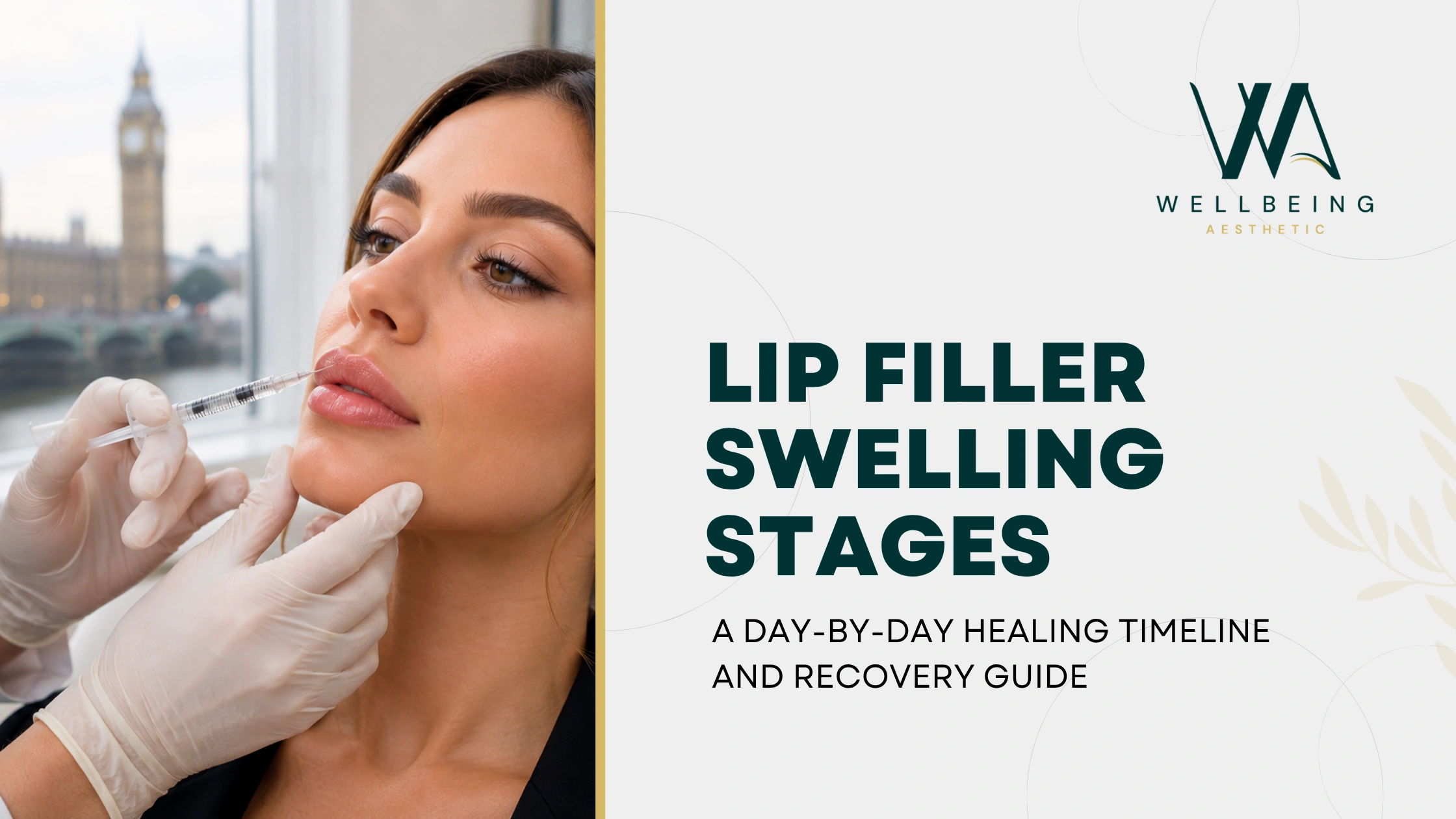
Swelling is one of the most common concerns people have after getting lip fillers. Your lips may initially look larger, firmer or less even than expected, particularly during the first few days.
At Wellbeing Aesthetic, lip filler treatments are carefully planned to enhance your natural lip shape while maintaining facial balance. Our practitioners also provide clear aftercare guidance, so you know what to expect throughout each stage of recovery.
In most cases, swelling is a normal part of the healing process and does not reflect your results. Lip filler swelling is usually most noticeable during the first 24 to 48 hours before gradually settling over the following days.
Why Do Lips Swell After Filler?
Anti-wrinkle injections use a Lip fillers commonly contain hyaluronic acid, a gel-like substance used to enhance volume, definition, shape, or symmetry.
During treatment, the practitioner places the filler into selected areas of the lips using a needle or cannula. Even when the procedure is performed carefully, the injections create minor tissue trauma. Your body responds by increasing blood flow and sending fluid to the treated area, resulting in temporary swelling.
Hyaluronic acids can also attract and retain water. This may make the lips look fuller during the early healing period than they will once the product has settled.
The swelling you see immediately after treatment therefore comes from a combination of:
- The filler itself
- Temporary inflammation
- Fluid retention
- Minor tissue trauma
- The effects of any an aesthetic used
- Possible bruising around injection points
Lip Filler Swelling Stages Day by Day
Day 0: Immediately After Your Lip Filler Treatment
Your lips will usually appear fuller as soon as the treatment is complete. However, some of this volume will be caused by immediate swelling rather than the filler alone.
You may notice:
- Puffy or enlarged lips
- Mild redness around injection points
- Tenderness or sensitivity
- A tight or firm sensation
- Temporary numbness from an aesthetic
- Tiny spots of blood at injection sites
- Slight unevenness between different areas
Your lips may initially look smooth and well-defined, but swelling can continue developing over the next several hours.
During this stage, avoid repeatedly touching or pressing the treated area. Only massage your lips when your practitioner has specifically instructed you to do so.
Day 1: Swelling May Reach Its Peak
For many patients, the morning after treatment is when their lips look most swollen.
The upper lip may appear particularly prominent, and one side might temporarily look larger than the other. Your lips may also feel tight, tender, or slightly uncomfortable when eating, smiling, or speaking.
This can feel worrying, especially when your lips look much larger than the result you requested. However, early swelling can significantly exaggerate both volume and asymmetry.
Swelling commonly peaks within the first one to two days before gradually reducing. Both competitor recovery guides reviewed for this article describe the first 24 to 48 hours as the most noticeable stage of swelling.
Continue following the aftercare instructions provided by your practitioner and monitor whether symptoms remain stable or begin improving.
Day 2: Puffiness and Tenderness Continue
On the second day, your lips may still feel swollen and sensitive. Bruising can also become more visible because it sometimes takes time for discolouration to appear at the surface. Common experiences during this stage include:- Continued puffiness
- Mild throbbing or tenderness
- Blue, purple or yellow bruising
- Temporary unevenness
- A firm or slightly lumpy texture
- Dryness or tightness
Small areas can swell differently, so the lips may not look perfectly symmetrical. This does not necessarily mean the filler has been placed unevenly.
Significant or rapid worsening of pain, however, should not be dismissed as normal swelling.
Day 3: Swelling Should Start Settling
By the third day, many people begin to notice that the initial puffiness is reducing.
Your lips might still look larger than the intended result, but the natural border, cupid bow and overall proportions should slowly become easier to see.
Bruising may still be present and can sometimes look darker before it fades. The lips may also feel firmer than usual because the filler is still integrating with the surrounding tissue.
Avoid analyzing small differences too closely at this point. The lips are still healing, and their appearance can change between morning and evening.
Days 4 to 5: The Shape Becomes Clearer
During days four and five, most people notice a more obvious improvement.
Typical changes include:
- Reduced puffiness
- Less tenderness
- Fading bruises
- Improved symmetry
- A softer texture
- Greater definition around the lip border
Your lips should begin looking closer to the planned result, although a small amount of swelling may remain.
If the lips are still mildly uneven, allow additional time before assuming that correction is necessary.
Days 6 to 7: Most Visible Swelling Has Reduced
By the end of the first week, much of the noticeable swelling has usually been resolved.
The lips should feel more comfortable during normal activities, and any remaining bruising should continue fading. You may still notice minor firmness, dryness, or localized puffiness.
This is often the stage when people begin to feel more confident about their results. Nevertheless, it is still too early to make a final judgement or request an additional filler.
Days 8 to 14: The Filler Continues to Settle
During the second week, residual swelling should continue decreasing, allowing the lips to feel softer and more natural.
At this stage:
- The treated area should feel less tender
- Minor lumps caused by swelling may soften
- Bruising should be significantly reduced
- The final shape becomes easier to assess
- Temporary asymmetry should improve
Many practitioners arrange a review at around two weeks because the early swelling has usually settled enough to assess the result more accurately.
If a firm lump, marked unevenness or persistent tenderness remains, contact your treating practitioner rather than trying to manipulate the filler yourself.
Weeks 2 to 4: Assessing the Result
Although many people look and feel healed after two weeks, lip fillers can continue integrating with the surrounding tissue over the following weeks.
By weeks two to four, you should have a much clearer idea of:
- The final lip volume
- Upper-to-lower lip balance
- Border definition
- Projection
- Overall symmetry
- How naturally the filler moves and feels
Any discussion about a top-up, adjustment or correction should usually take place only after the initial healing period, unless your practitioner identifies a complication requiring earlier treatment.
How Long Does Lip Filler Swelling Last?
Noticeable swelling commonly lasts between three and seven days, with the most pronounced swelling generally occurring within the first 24 to 48 hours.
Mild swelling, firmness, or bruising may remain for up to two weeks. Some people heal faster, while others require more time.
Your recovery may be affected by:
- The amount of filler injected
- The type and consistency of filler
- Whether a needle or cannula was used
- The number of injection points
- Your natural sensitivity to swelling
- Previous lip filler treatments
- Your general health
- Alcohol intake
- Heat exposure
- Strenuous exercise
- Certain medicines and supplements
Always tell your practitioner about prescribed medicines, over-the-counter products and supplements during your consultation. Do not stop prescribed medication without medical advice.
Is Uneven Swelling After Lip Filler Normal?
Temporary unevenness is common during the first few days.
One area may receive more tissue manipulation than another, and natural differences in blood flow can cause each side to swell differently. The upper lip may also look more prominent than the lower lip during early recovery.
Unevenness is more likely to be caused by swelling when it:
- Appears soon after treatment
- Changes throughout the day
- Feels soft rather than severely painful
- Gradually improves over several days
The result should not be assessed accurately while significant swelling is present.
Contact your practitioner if asymmetry becomes more pronounced, remains unchanged beyond the expected healing period or is accompanied by increasing pain or unusual skin discolouration.
How to Reduce Lip Filler Swelling Safely
You cannot completely prevent swelling, but sensible aftercare may help keep it manageable.
1. Apply a Cool Compress Carefully
A cool compress can be placed gently against the lips for short periods during the first day.
Do not apply ice directly to your skin. Wrap the cold pack in a clean cloth and avoid pressing firmly against the filler.
2. Keep Your Head Elevated
Sleeping with your head slightly raised during the first one or two nights may help reduce fluid accumulation.
Try to sleep on your back and avoid putting pressure on your lips.
3. Avoid Strenuous Exercise
Intense exercise increases circulation and body temperature, which can temporarily worsen swelling.
Follow your practitioner’s guidance on when to resume exercise. Many people are advised to avoid demanding workouts for at least the first 24 hours.
4. Avoid Excessive Heat
Hot baths, saunas, steam rooms, sunbeds and prolonged sun exposure can increase blood flow and make swelling more noticeable.
Keep the treated area cool during the early recovery period.
5. Avoid Alcohol
Alcohol can contribute to bruising, dehydration, and increased swelling. It is generally sensible to avoid it immediately before and after treatment, based on your practitioner’s instructions.
6. Do Not Massage Without Advice
Massage is not automatically suitable for every patient or filler technique.
Pressing or aggressively rubbing the lips may irritate the tissue or affect the result. Massage only when your treating practitioner has demonstrated exactly how and when to do it.
7. Avoid Unnecessary Pressure
For the first day or two, avoid activities that place excessive pressure on the lips. Your practitioner may recommend temporarily avoiding kissing, smoking, straws or anything else that repeatedly compresses the area.
8. Follow Your Personalized Aftercare Plan
Aftercare guidance can differ depending on the filler product, technique and your medical history.
The instructions provided by your own practitioner should take priority over general advice found online.
What Can Make Lip Filler Swelling Worse?
- Drinking alcohol
- Strenuous exercise
- Hot showers and saunas
- Direct sun or heat exposure
- Pressing or rubbing the lips
- Sleeping face-down
- High-salt meals
- Smoking or vaping
- Applying irritating skincare around the mouth
- Ignoring the aftercare plan
Normal Swelling Versus a Possible Complication
- Develops shortly after treatment
- Is most noticeable within the first two days
- Causes mild or moderate tenderness
- Gradually improves
- May include temporary bruising
- Can produce short-term unevenness
- Becomes less uncomfortable each day
- Severe or increasing pain
- Skin that becomes unusually pale, white, grey or mottled
- Dusky, purple or irregular discolouration
- Skin that feels unusually cold
- Blistering
- Rapidly worsening swelling
- Spreading redness or heat
- Pus or discharge
- Fever or feeling generally unwell
- Difficulty breathing
- Swelling of the tongue or throat
- Any visual disturbance
A vascular occlusion is a rare but serious filler complication in which normal blood flow becomes compromised. ACE UK explains that untreated vascular occlusion can deprive tissue of oxygen and lead to tissue damage, scarring or infection.
Severe pain and unusual colour changes require urgent assessment. Do not wait until a routine follow-up appointment if you are concerned.
Difficulty breathing, tongue swelling, throat swelling, or visual symptoms should be treated as a medical emergency.
Can Lip Fillers Trigger Cold Sores?
Lip injections can occasionally reactivate the herpes simplex virus in people who are prone to cold sores.
Tell your practitioner before treatment when you have previously experienced cold sores, particularly when outbreaks are frequent. They can assess whether preventive medication or additional precautions may be appropriate.
Do not attend a filler appointment with an active cold sore unless your practitioner has assessed the situation and confirmed that treatment can proceed safely.
When Can You Apply Lipstick After Lip Filler?
Avoid applying lipstick, gloss, or other lip products immediately after treatment because the injection points need time to close.
Your practitioner will tell you when products can be applied safely. Waiting approximately 24 hours is commonly advised, but you may need to wait longer if the injection points remain irritated or open.
When you resume wearing lip products, use clean applicators and avoid old or shared products that could introduce bacteria.
How Soon Can You Attend an Event After Lip Fillers?
Although lip filler is often described as a treatment with minimal downtime, swelling and bruising can be visible for several days.
Avoid scheduling your first appointment immediately before a wedding, holiday, photoshoot, or major social event. Allowing at least two weeks gives your lips time to settle and provides an opportunity for a review if needed.
People who bruise easily may wish to leave an even longer buffer.
Lip Filler Recovery Checklist
During the first few days:
- Follow the written aftercare provided by your clinic
- Use a wrapped cool compress gently when advised
- Sleep with your head slightly elevated
- Avoid unnecessary touching
- Avoid strenuous exercise and excessive heat
- Avoid alcohol for the period recommended
- Do not massage unless instructed
- Monitor whether swelling and discomfort are improving
- Keep your practitioner’s contact details available
- Report concerning symptoms promptly
Lip Filler Treatment at Wellbeing Aesthetic in Croydon
Lip filler treatment should begin with a careful consultation rather than a one-size-fits-all approach.
At Wellbeing Aesthetic, treatments are planned around your individual facial proportions, medical history and aesthetic goals. The Croydon clinic focuses on subtle, personalized enhancements designed to support balance and confidence rather than dramatically changing your natural features.
Before proceeding, your practitioner can discuss:
During the first few days:
- The result you want to achieve
- Whether lip filler is suitable for you
- An appropriate amount of filler
- Expected swelling and downtime
- Potential side effects and complications
- Your personalized aftercare
- When your results should be reviewed
If you are considering lip fillers in Croydon, London or would like professional advice about a previous treatment, book a consultation with the Wellbeing Aesthetic team.
Final Thoughts
Lip filler swelling can look dramatic during the first few days, but it should follow a gradual pattern of improvement.
Expect the lips to be most swollen during the first 24 to 48 hours. Puffiness, tenderness and temporary unevenness should then begin reducing, with a clearer result becoming visible over the following one to two weeks.
The safest approach is to choose a suitably trained practitioner, follow your personalized aftercare instructions and contact Wellbeing Aesthetic promptly when pain, skin colour or swelling does not follow the expected recovery pattern.
This guide provides general information and does not replace assessment or advice from your treating practitioner.
Frequently Asked Questions About Lip Filler Swelling
Swelling is often most noticeable during the first 24 to 48 hours. For some patients, the morning after treatment appears more dramatic because fluid has accumulated overnight.
The lips can look larger than expected for the first two or three days. They should gradually become less puffy during the remainder of the first week.
Yes. Swelling may look more noticeable the next morning because you have been lying down, and your body’s inflammatory response is still developing.
Different parts of the lips can react differently to the injection process. The upper lip may temporarily retain more swelling or appear more projected. This should gradually improve.
Mild bruising around the injection sites is common. It may become more visible after one or two days before fading during the following week.
Temporary firmness can occur because of swelling and the presence of newly placed fillers. The lips should gradually soften as inflammation settles, and the product integrates.
Minor irregularities can sometimes be felt during early healing. Do not massage them unless instructed. Persistent, painful, or visible lumps should be assessed by your practitioner.
Ask your treating practitioner or pharmacist for which pain relief is appropriate for you. Do not take medication based solely on general internet advice, particularly when you use prescribed medicines or have an underlying medical condition.
Only massage the treated area when your practitioner has advised it. Unnecessary massage may irritate the lips or interfere with the intended placement.
Seek urgent professional advice when swelling is accompanied by severe pain, worsening symptoms, unusual white or mottled skin, blistering, spreading redness, fever or other concerning changes.
Many people begin looking more settled after the first week. The result can usually be judged more accurately after approximately two weeks, although subtle integration may continue for longer.
Avoid deciding on additional fillers while your lips are still swollen. Your practitioner should assess the result after the initial healing period and advise whether a top-up is suitable.
Book your consultation today!
Fill out the form below and we’ll be in touch shortly.