
Skin Boosters vs Dermal Fillers: What Is the Difference?
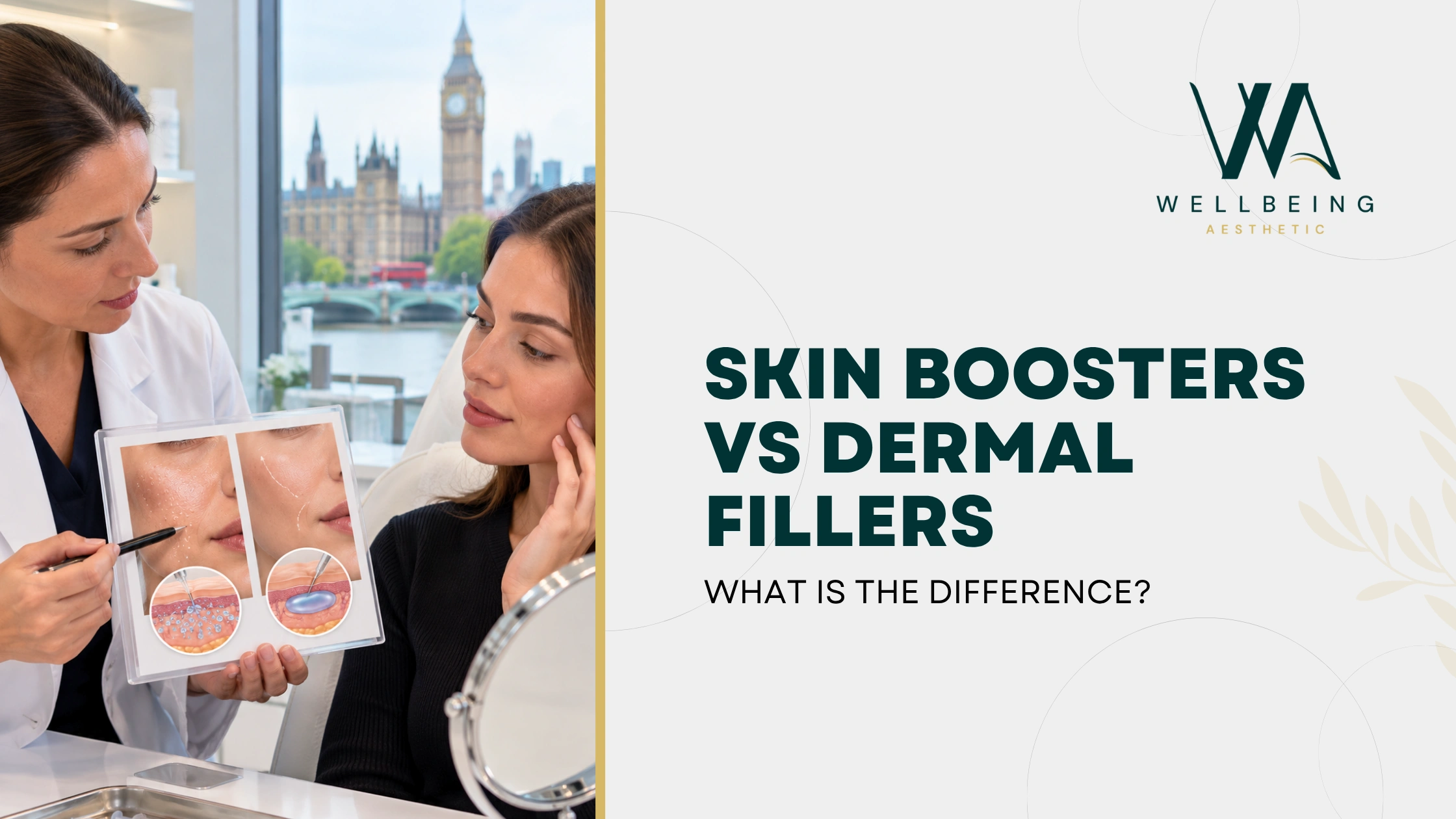
Standing in front of a treatment menu with “skin booster” and “dermal filler” listed one above the other is a common moment of confusion. Both use hyaluronic acid, both are delivered by injection, and both promise better looking skin, so it is easy to assume they do roughly the same job.
They do not. One treatment rebuilds hydration and texture from within the skin. The other restores volume and structure that has been lost, or that was never quite there to begin with. Choosing the wrong one for your concern is one of the most common reasons people feel disappointed with a treatment, not because it failed, but because it was never designed to solve that particular problem.
This guide sets out how skin boosters and dermal fillers differ, what each does beneath the skin, how their costs and results compare, and whether the two can be combined. You can see both sit alongside the rest of the aesthetic treatments available at Wellbeing Aesthetic’s Croydon clinic, a useful starting point before your consultation.
As with any injectable treatment, none of this replaces a proper assessment. Skin type, medical history and your specific goals all affect which treatment, or combination of treatments, makes sense for you, which is why a consultation with a qualified practitioner should always come before booking either one.
Key Takeaways
- Different jobs, same ingredient. Both treatments often use hyaluronic acid, but skin boosters hydrate the skin’s texture while dermal fillers restore lost volume and shape.
- Skin boosters spread, fillers hold their position. Skin boosters use a thinner, more fluid hyaluronic acid that disperses evenly, while dermal fillers use thicker, often cross linked gels designed to hold their structure.
- Longevity differs considerably. Skin booster results generally last around four to six months, while dermal filler results commonly last nine to eighteen months depending on the product and area treated.
- They are not interchangeable. A skin booster will not lift a hollow cheek, and a dermal filler is not designed to treat overall dullness or dehydration.
- Combining them is sometimes appropriate. Some patients benefit from a course of skin boosters alongside filler in a different area, but only when a practitioner confirms there is a genuine clinical reason for each treatment.
- Cost reflects the treatment, not just the product. UK skin booster sessions typically start lower than a full syringe of dermal filler, though prices vary by clinic, product and treatment area.
- Downtime is usually milder with skin boosters. Fillers can cause more noticeable swelling or bruising, particularly around the lips or under the eyes, while skin boosters tend to settle within a day or two.
- The right choice depends on your concern. Dullness and dehydration point toward a skin booster, while volume loss or contour change points toward a dermal filler, and a consultation clarifies which applies to you.
What Is the Main Difference Between Skin Boosters and Dermal Fillers?
The main difference comes down to purpose. Skin boosters use a thin hyaluronic acid solution, injected in small amounts across the skin, to improve hydration, texture and radiance. Dermal fillers use a thicker hyaluronic acid gel, injected at specific points, to add volume, reshape a feature or restore lost structure.
This one distinction, hydration versus volume, shapes almost everything else in this guide, from the injection technique used to how long the results last and what each treatment reasonably costs.
What Are Dermal Fillers and How Do They Work?
Dermal fillers are gel based hyaluronic acid treatments, often cross linked so the product holds its shape rather than dispersing. A practitioner injects the gel at specific points and depths to restore volume, redefine a contour, or fill a hollow.
What Are Dermal Fillers Commonly Used For?
- Restoring flattened or hollow cheeks
- Adding volume and definition to thin lips
- Softening nasolabial folds and marionette lines
- Filling tear troughs beneath the eyes
- Refining jawline and chin contour
Results from dermal fillers generally last between nine and eighteen months, depending on the product used, the area treated and how quickly an individual’s body metabolises hyaluronic acid.
Because filler results are visible almost immediately, most patients experience some swelling or bruising in the first few days. If you are considering lip filler specifically, our day by day guide to lip filler swelling stages sets out a realistic healing timeline.
What Are Skin Boosters and How Do They Work?
Skin boosters use a much thinner, more fluid hyaluronic acid formulation, delivered as small micro injections spread evenly across the treatment area rather than concentrated at specific points. Because the formulation disperses rather than holding a shape, skin boosters do not add volume or change a feature’s contour.
Instead, the hyaluronic acid draws in and holds moisture within the dermis, gradually improving hydration, texture and radiance over several weeks. Many people describe the effect as an injectable version of a deep moisturiser, one that keeps working long after a cream would have been absorbed.
Skin boosters tend to suit dull, dehydrated or tired looking skin where volume has not been lost, Skin boosters may suit people whose main concerns are dehydration, dullness, fine superficial lines or changes in overall skin quality rather than loss of facial volume.
You can see the kind of subtle, gradual glow this treatment produces in the Wellbeing Aesthetic gallery, alongside results from the clinic’s other treatments.
Skin Boosters vs Dermal Fillers: Full Comparison at a Glance
| Factor | Skin Boosters | Dermal Fillers |
|---|---|---|
| Main purpose | Hydration and skin quality | Volume and contour restoration |
| Formulation | Thin, low viscosity hyaluronic acid | Thicker, often cross linked hyaluronic acid gel |
| Injection technique | Multiple micro injections spread evenly | Targeted injections at specific points and depths |
| Best for | Dull, dehydrated or tired looking skin | Hollow cheeks, thin lips, or lost structure |
| Results timeline | Builds gradually over 2 to 4 weeks | Visible immediately, settles over 1 to 2 weeks |
| How long results last | Around 4 to 6 months | Around 9 to 18 months, depending on product and area |
| Typical downtime | Minimal; small bumps settle in a day or two | Possible swelling or bruising for several days |
EXPLORE YOUR OPTIONS
If dullness and dehydration are your main concern rather than lost volume, it’s worth exploring the full range of treatments available at Wellbeing Aesthetic before deciding what to book.
Explore Treatments →How Do Results and Longevity Really Compare?
Skin booster results build gradually. Most people notice better hydration within one to two weeks, with the fuller effect developing over two to four weeks. That gradual build is why maintenance sessions are usually recommended every four to six months, rather than treated as a one-off.
Dermal filler results work the opposite way. Volume is visible from the appointment itself, though the area needs one to two weeks to settle as any swelling reduces. Once settled, results commonly last nine to eighteen months, making fillers the longer lasting of the two treatments.
How Does Downtime Compare Between the Two Treatments?
- Skin boosters: small bumps at injection points usually settle within a day or two, with mild bruising possible but uncommon.
- Dermal fillers: swelling is more likely, particularly around the lips or under the eyes, and bruising can take several days to a week to fade.
- Both treatments: most people return to normal activities the same day, though heat, intense exercise and alcohol are generally best avoided for the first 24 hours.
How Much Do Skin Boosters and Dermal Fillers Cost in the UK?
| Treatment | General UK Market Range | Notes |
|---|---|---|
| Skin booster, single session | £150 to £450 | A course of 2 to 3 sessions is usually recommended |
| Skin booster, full course | £300 to £1,000 | Followed by maintenance every 4 to 6 months |
| Dermal filler, per syringe | £200 to £500+ | Cost rises with premium products and larger areas |
| Dermal filler, full treatment plan | Varies significantly | Depends on the number of syringes and areas combined |
Can You Have Skin Boosters and Dermal Fillers Together?
Yes, in many cases the two treatments are complementary rather than competing, since they solve different problems on the same face. A common approach is a course of skin boosters to improve overall hydration and texture, alongside a dermal filler in an area with genuine volume loss, such as the cheeks or under the eyes.
A practitioner should only recommend combining treatments when there is a clear reason for each one, not simply to sell a fuller plan. Spacing and sequencing between the two also matters clinically, so this should always be planned by whoever is administering your treatment.
Which Treatment Is Right for You, a Skin Booster or a Dermal Filler?
The most useful starting point is being honest about what is actually bothering you when you look in the mirror.
- If your main concern is dullness, dehydration, or tired looking skin without any loss of volume, a skin booster is usually the more appropriate starting point.
- If your main concern is hollowing, flattened contour, thinning lips, or lines caused by lost structure, a dermal filler is more likely to address it.
- If you notice a mix of both, or are simply unsure, a combination approach, or a different treatment such as Profhilo, may be worth raising at your consultation.
If your concern is more about overall skin repair or scarring than hydration alone, PRP treatment is another regenerative option worth discussing with your practitioner.
Who Should Avoid Skin Boosters or Dermal Fillers?
Both treatments are generally well tolerated, but neither suits everyone. A practitioner will typically advise avoiding treatment if you are pregnant or breastfeeding, have an active skin infection in the area, a known hyaluronic acid allergy, or a bleeding disorder or blood thinning medication without medical clearance. Cosmetic injectables are not available to under 18s in England.
Dermal fillers are regulated differently from prescription-only medicines such as botulinum toxin. Their regulatory status can depend on the product, composition and intended use, while UK rules around non-surgical cosmetic procedures continue to develop. This makes it particularly important to ask what product is being used, where it was sourced, and what training, experience and insurance the practitioner has.
How Do You Choose the Right Clinic for Either Treatment in Croydon?
- Check who is administering the treatment, and whether it is carried out or directly supervised by a medically trained practitioner.
- Ask what happens at the consultation. A genuine consultation reviews your skin, medical history and goals before recommending anything.
- Look for transparency on products and pricing, including a clear, itemised quote.
- Consider hygiene and safety protocols, and ask directly if you are unsure.
BOOK YOUR CONSULTATION
Every treatment plan at Wellbeing Aesthetic begins with a free, no obligation consultation. Book your consultation here to have your skin properly assessed before deciding between a skin booster and a dermal filler.
Book Consultation →How Wellbeing Aesthetic Approaches Skin Boosters and Dermal Fillers
At Wellbeing Aesthetic, every treatment plan begins with a free consultation with Dr Huma Saeed or senior aesthetic practitioner Shasha, where your skin, health history and goals are reviewed before anything is recommended. If a skin booster, a dermal filler, Profhilo, or a combination genuinely suits your concern better, that is explained honestly.
The clinic’s medically led positioning, with Dr Saeed’s NHS background and Shasha’s fifteen-plus years as an aesthetic practitioner and accredited trainer, means the consultation focuses on whether a treatment is clinically appropriate, not simply whether you would like to book one. This consultation-led approach is particularly relevant for patients who want to understand their options, expected results and potential risks before proceeding.
A Simple Checklist Before Booking Either Treatment
- Write down whether your main concern is dullness and dehydration, or volume and contour loss.
- Ask your practitioner to explain, in plain terms, why they are recommending a specific treatment for your concern.
- Check who is administering the injections and confirm their qualifications.
- Request a clear, itemised quote before agreeing to any course or combination of treatments.
- Ask what results and downtime timeline is realistic for you specifically, not just in general.
- Confirm what aftercare support is included, and who to contact if you have questions afterwards.
Conclusion
READY TO DECIDE?
If you are still unsure whether a skin booster, a dermal filler, or a combination of both fits your skin, get in touch with Wellbeing Aesthetic on +44 7918 856255 to book a free consultation.
Book Consultation →Frequently Asked Questions
Related Wellbeing Aesthetic Blogs

Dr. Huma
Dr. Huma Saeed is a medically trained professional with a passion for aesthetic medicine and patient care. After relocating to London, she continued working within the NHS while developing her clinical expertise. She later specialised in aesthetic treatments and established her own clinic, focusing on IV drips and PRP treatments, delivered with professionalism, safety, and personalised care.
Book your consultation today!
Fill out the form below and we’ll be in touch shortly.