
Polynucleotides Under Eyes: Benefits, Results, Side Effects and How Long They Last
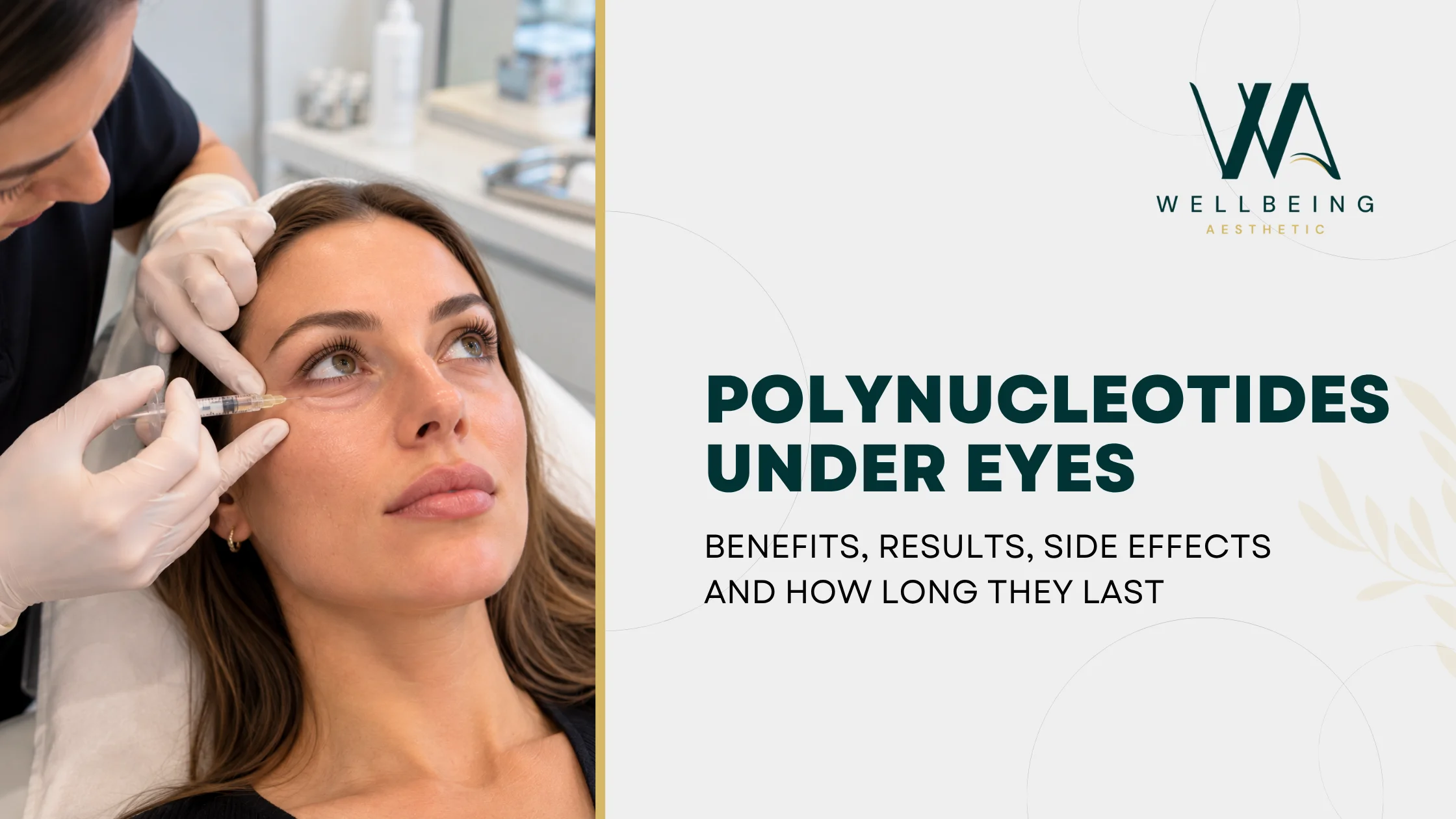
Under-eye polynucleotides are injectable treatments used to improve skin quality rather than add volume. They may help with thin, crepey or dehydrated-looking skin and fine lines, while true under-eye hollows usually require a different approach. Treatment normally involves a short course rather than one appointment.
Concealer can settle into fine lines when under-eye skin is dry, thin or crepey, although several factors can contribute to how the area looks. It is one of the reasons polynucleotides have become part of Wellbeing Aesthetic’s regenerative treatment range in Croydon, alongside dermal fillers and Profhilo.
Unlike a filler, polynucleotides do not add volume under the eyes. They work at a cellular level to support the skin’s own repair processes, which is why they are often considered for thin, crepey or tired-looking under-eye skin rather than visible hollows.
This guide covers what polynucleotides actually are, how they work under the eyes, what results and side effects to realistically expect, how long results last, and who should avoid the treatment altogether, including an important point about fish allergy.
None of this replaces a proper consultation. Skin type, medical history and your goals all affect whether polynucleotides are the right starting point for you, which is why a treatment plan should always begin with an assessment rather than a menu.
Key Takeaways
- Repairs rather than fills. Polynucleotides work at a cellular level to support skin repair and regeneration rather than adding volume the way a filler does.
- Built around a short course. Most practitioners recommend three to four sessions spaced two to four weeks apart rather than a single appointment.
- Results build progressively. Improvements in skin texture, hydration and fine lines typically develop over the weeks following treatment, not immediately.
- Fish allergy is an important contraindication. Most polynucleotide products are derived from purified salmon DNA, so a known fish or seafood allergy generally rules out this treatment.
- Not a fix for hollowing caused by volume loss. Under-eye hollows from lost structure are usually better addressed with a dermal filler rather than polynucleotides.
- Side effects are usually mild. Temporary swelling, bruising or tenderness at injection points are the most commonly reported reactions.
- Results can last several months. Benefits build across a course and are generally reported to last around six months, with maintenance reviewed individually.
- Pricing reflects the clinic and course length. UK under-eye polynucleotide sessions generally fall between £250 and £500 each.
What Are Polynucleotides?
Polynucleotides are an injectable treatment made from purified DNA fragments, designed to support the skin’s own repair and regeneration processes rather than add shape or volume. They are often grouped with other bio-stimulatory treatments because they work with the skin’s biology instead of sitting beneath it like a filler.
Most polynucleotide products used across the industry are derived from purified salmon DNA, which is why a known fish or seafood allergy is treated as an important contraindication and something your practitioner will ask about at consultation. You can see examples of the results this treatment produces in the Wellbeing Aesthetic gallery, alongside the clinic’s other regenerative treatments.
How Do Polynucleotides Work Under the Eyes?
The skin under the eyes is thinner and more delicate than almost anywhere else on the face, which is why it is often the first area to show fine lines, crepiness or a tired appearance. A practitioner delivers small, precise deposits of polynucleotides just beneath the skin surface in this area.
Once injected, the fragments support the activity of fibroblasts, the cells responsible for producing collagen and elastin, while also helping the tissue hold moisture. Over several weeks, many patients notice firmer, better hydrated skin with a smoother texture around the eyes.
What Are the Benefits of Polynucleotides Under the Eyes?
- Improved skin texture and firmness as collagen and elastin production is supported
- Better hydration in an area that is often thin and prone to dryness
- A reduction in the appearance of fine, superficial lines under the eyes
- Suitability for patients who do not want, or do not need, added volume in this area
- A regenerative option that can be considered alongside or instead of filler, depending on the underlying cause of your concern
These are gradual, quality-focused outcomes rather than a dramatic change overnight. Where skin repair and texture are the main goal rather than volume, some patients also ask about PRP treatment, which works on a similar regenerative principle using the patient’s own plasma.
Polynucleotides vs Dermal Filler vs Profhilo for Under Eyes
These three treatments are sometimes confused because they can all be used around the eyes, yet they solve different problems. The table below sets out how they compare.
| Treatment | Main Purpose | Typical Results Last | Best For |
|---|---|---|---|
| Polynucleotides | Cellular repair and skin regeneration | Around 6 months | Thin, crepey or tired-looking under-eye skin without hollowing |
| Dermal Filler | Restoring lost volume in the tear trough | 9 to 18 months | Visible hollows or shadowing caused by lost volume |
| Profhilo | Bio-remodelling and collagen stimulation | 6 to 12 months | General skin laxity across the face, neck or hands |
If your main concern under the eyes is a visible hollow rather than skin quality, our lip filler swelling stages guide gives a sense of what to expect from hyaluronic acid filler healing, since the same product category is often used in the tear trough.
EXPLORE YOUR OPTIONS
If skin quality, rather than lost volume, is your main concern under the eyes, it’s worth exploring the full range of treatments available at Wellbeing Aesthetic before deciding what to book.
Explore Treatments →What Happens During a Polynucleotide Treatment for Under Eyes?
- Consultation and assessment. Your practitioner reviews your skin, medical history and goals, and screens specifically for fish allergy before confirming you are suitable.
- Cleansing and preparation. The area is cleaned thoroughly, and numbing cream can be applied if you find injections uncomfortable.
- Micro-injections. Small, precise deposits are placed just beneath the skin around the orbital area using a fine needle.
- Aftercare guidance. You will be talked through what to expect over the following days and how to protect your results.
- Further sessions. The course is usually completed with two to three further treatments spaced two to four weeks apart.
Most sessions take around fifteen to thirty minutes, and there is generally no need to set aside recovery time afterwards.
MEET YOUR PRACTITIONER
Every polynucleotide treatment plan begins with a consultation with Dr Huma Saeed or Shasha. You can read more about the team’s NHS-trained, consultation-first approach on the Wellbeing Aesthetic about page.
Meet The Team →How Much Do Polynucleotides Under the Eyes Cost in the UK?
Pricing for polynucleotide treatment varies by clinic, practitioner experience, and whether sessions are booked individually or as a course, so there is no single correct figure across London or the wider UK market.
| Course Structure | General UK Market Range | Notes |
|---|---|---|
| Single session | £250 to £500 | Price depends on the clinic and practitioner experience |
| Course of 3 to 4 sessions | £700 to £1,800 | The course typically recommended for a first treatment |
| Maintenance session | Similar to a single session price | Often booked from around 6 months onward |
These figures are a general market guide, not a Wellbeing Aesthetic price list. The clinic does not publish fixed prices because every treatment plan depends on the number of sessions a particular patient needs, so an accurate, itemised quote is only possible after a skin assessment.
How Long Do Results Last?
Results from polynucleotides build gradually rather than appearing overnight. Most people begin noticing firmer, better hydrated skin within a few weeks of starting the course, with improvements continuing to develop as further sessions are completed.
A completed course is generally reported to improve skin quality for around six months before gradually returning toward its pretreatment state, though individual results vary depending on skin condition, lifestyle and how your body responds. Many patients choose a maintenance session from around six months onward, reviewed individually rather than assumed.
What Are the Side Effects of Polynucleotides Under the Eyes?
- Temporary swelling or puffiness around the injection points, which is often more noticeable under the eyes than elsewhere on the face
- Mild bruising, particularly given how thin and delicate the under-eye skin is
- Redness or tenderness in the treated area for a day or two
- Small bumps at injection points that typically settle within a few days
More significant reactions are uncommon when treatment is carried out by a suitably qualified practitioner, but as with any injectable, there is no way to guarantee how an individual’s skin will respond, which is why a thorough consultation matters.
BOOK YOUR CONSULTATION
Every polynucleotide treatment plan starts with a free, no obligation consultation. Book your consultation here to have your skin properly assessed before any treatment is agreed.
Who Should Avoid Polynucleotides Under the Eyes?
Polynucleotides are not automatically suitable for everyone. The most important contraindication is a known fish or seafood allergy, since the product is typically derived from purified salmon DNA, so this is one of the first things a practitioner should ask about at consultation.
Treatment is also generally avoided during pregnancy or breastfeeding, for anyone with an active skin infection in the area, anyone with a bleeding disorder or taking blood thinning medication without medical clearance, and those with certain autoimmune conditions in an active phase.
Polynucleotides sit in a broadly similar regulatory position to other bio-stimulatory injectables rather than as a prescription-only medicine, so checking a practitioner’s training, registration and insurance matters just as much as the injection technique itself. NHS guidance on cosmetic procedures sets out general safety questions worth asking before booking any injectable treatment.
How Do You Choose the Right Clinic for Polynucleotides Under Eyes in London?
- Check who is administering the treatment, and whether it is carried out or directly supervised by a medically trained practitioner
- Confirm that fish allergy, along with your wider medical history, is screened for at consultation, not skipped over
- Look for transparency on the product used and pricing, including a clear, itemised quote
- Consider hygiene and safety protocols, and ask directly if you are unsure
SEE WHAT OTHERS SAY
Curious what a polynucleotide course really feels like? You can read patient experiences of aesthetic treatments at the clinic before deciding whether to book.
Read Testimonials →How Wellbeing Aesthetic Approaches Polynucleotide Treatment
At Wellbeing Aesthetic, every polynucleotide treatment plan begins with a free consultation with Dr Huma Saeed or senior aesthetic practitioner Shasha, where your skin, health history and goals are reviewed before anything is recommended. Fish allergy and general medical history are checked as a standard part of that process, not treated as an afterthought.
The clinic’s medically led positioning, with Dr Saeed’s NHS background and Shasha’s fifteen-plus years as an aesthetic practitioner and accredited trainer, means the consultation focuses on whether polynucleotides are clinically appropriate for you specifically. If a dermal filler, Profhilo, or a combination approach would serve your under-eye concern better, that is explained honestly, and some patients also combine treatment with IV vitamin drip therapy for broader skin and wellness support where there is a genuine reason to do so.
A Simple Checklist Before Booking Polynucleotides Under Eyes
- Confirm whether your main concern is skin quality and texture, in which case polynucleotides fit, or hollowing from lost volume, in which case a filler may be more appropriate.
- Disclose any fish or seafood allergy clearly at your consultation, since this is an important contraindication.
- Ask directly who will be performing your injections and what their qualifications are.
- Request a clear, itemised quote before agreeing to a course of treatment.
- Plan for a course of three to four sessions rather than budgeting for a single appointment only.
- Ask what aftercare support is included and confirm who to contact if you have questions after your appointment.
Conclusion
Polynucleotides are not a volumising treatment, and that distinction matters more than almost anything else when deciding whether they suit your under-eye concern. They work with the skin’s own repair processes to improve texture, hydration and firmness over a short course, rather than filling a hollow the way a dermal filler would. Understanding how they compare with filler and Profhilo, what realistic results and side effects look like, and who should avoid treatment, including the fish allergy contraindication, puts you in a stronger position walking into a consultation.
READY TO FIND OUT MORE?
If skin laxity or dullness has been bothering you, get in touch with Wellbeing Aesthetic on +44 7918 856255 to book a free consultation and find out whether Profhilo is the right starting point for you.
Book Consultation →Frequently Asked Questions
Polynucleotides are used to improve the texture, hydration and firmness of thin or tired-looking under-eye skin by supporting the skin's own repair processes. They are not designed to add volume the way a dermal filler does.
No. Most polynucleotide products are derived from purified salmon DNA, so a known fish or seafood allergy is an important contraindication. This should always be disclosed at your consultation so your practitioner can confirm whether treatment is appropriate.
Most practitioners recommend a course of three to four sessions, spaced two to four weeks apart, for the initial treatment. A maintenance session is often considered from around six months onward.
Results generally build across the course and are reported to last around six months before gradually returning toward the skin's pretreatment state. Individual results vary depending on skin condition, lifestyle and how your body responds.
Most patients describe mild discomfort similar to a small pinch at each injection point. A topical numbing cream can be applied beforehand, particularly given how delicate the under-eye area is.
Polynucleotides work at a cellular level to improve skin quality and do not add volume, while dermal filler is used to restore lost volume in a hollow or tear trough. The right choice depends on whether your main concern is skin texture or visible hollowing.
Under-eye polynucleotide sessions generally range from around £250 to £500 each, with a course of three to four sessions often costing £700 to £1,800 in total. Exact pricing depends on the clinic and practitioner, so a personalised quote from a consultation is the only reliable figure.
Temporary swelling, mild bruising and tenderness at injection points are the most commonly reported side effects, and these are often more noticeable under the eyes given how thin the skin is there. Most settle within a few days.
Related Wellbeing Aesthetic Blogs

Dr. Huma
Dr. Huma Saeed is a medically trained professional with a passion for aesthetic medicine and patient care. After relocating to London, she continued working within the NHS while developing her clinical expertise. She later specialised in aesthetic treatments and established her own clinic, focusing on IV drips and PRP treatments, delivered with professionalism, safety, and personalised care.
Book your consultation today!
Fill out the form below and we’ll be in touch shortly.